
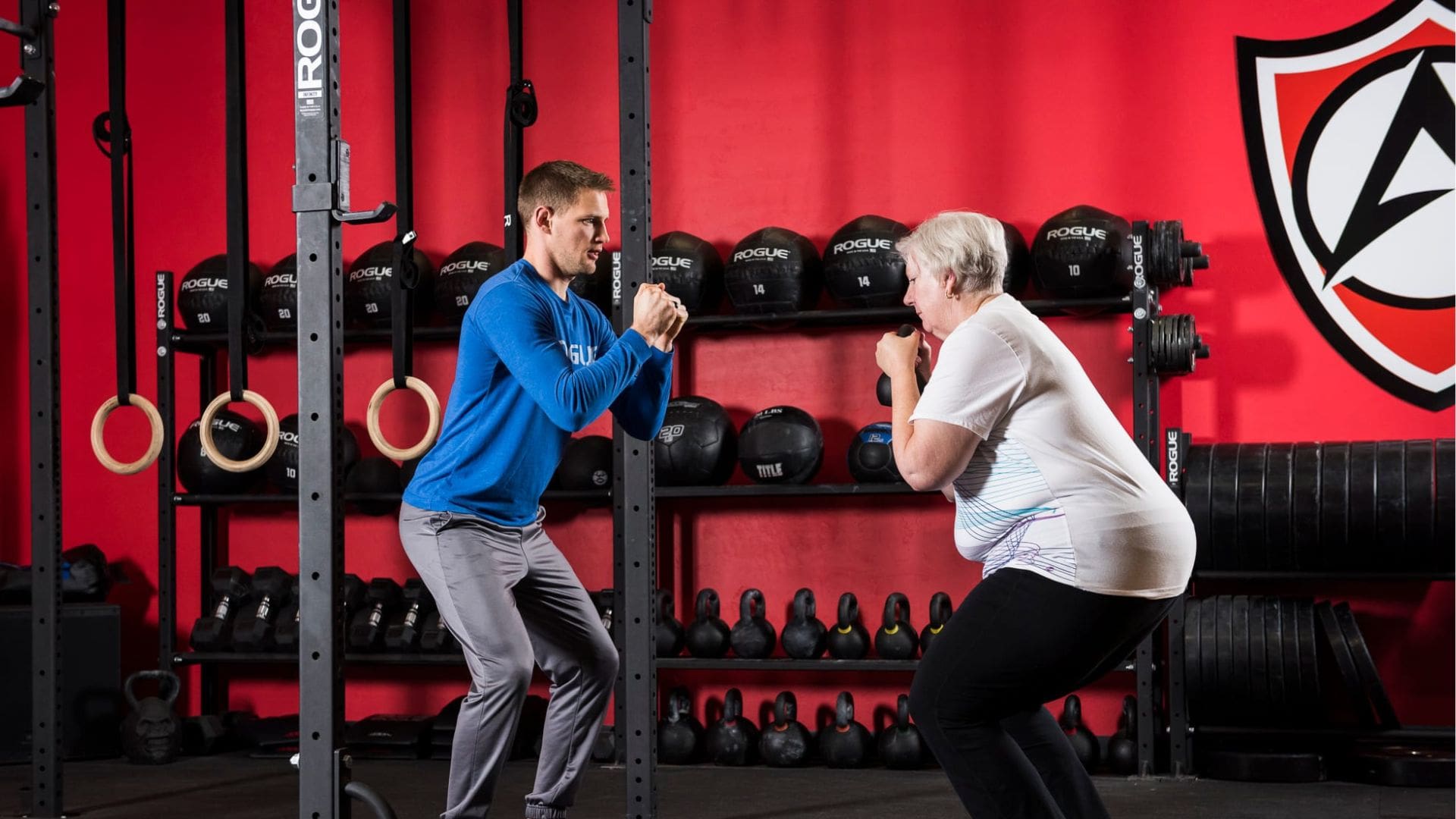
If you search for a personal trainer in Sturgeon Bay, you will find plenty of people willing to count your reps and cheer you on. That is not coaching, and it is not what we do. A rep counter watches the clock. A cheerleader watches your effort. A coach watches your movement.
A coach teaches you something you did not know when you walked in, sees what your body is actually doing, and fixes what needs fixing before it becomes a problem. At CrossFit Armati, coaching is a professional standard, and it shows up in every class.
Not a Rep Counter: What a Coach Actually Is
Every workout has to check three boxes before it reaches our members. Is it safe? Is it effective? Is it efficient? If it is not all three, we change it. That is what holding the standard means here, and it is the difference between working out and actually getting somewhere.
Below is what that looks like in practice, piece by piece.
Teaching: Complicated, Made Simple
Good coaching starts with teaching. A complex movement gets broken down into one short, clear idea you can use on your very next rep. No lecture, no jargon, just the piece that makes the movement click.
That matters most for beginners. Nobody should need a fitness background to understand what they are doing and why. When the teaching is clear, you stop guessing, and when you stop guessing, you start progressing. Our job as coaches is to make the complicated feel simple, then get out of the way and let you do the work.
Seeing: Trained Eyes on the Room
Let me be honest about something. In a group class, no coach sees literally every rep. Anyone who tells you otherwise is overselling it. What we actually do is scan the room for the entire hour, watching for the faults that matter most: the ones that put you at risk, or the ones quietly holding back your progress.
That is where my background comes in. I am a Doctor of Chiropractic, and my rehab background trained me to read movement the way a clinician does. A hip shifting in a squat, a back rounding under load, a shoulder that is not moving the way it should: those are the things we catch early.
That clinical eye is what lets us safely guide people of every fitness level, ability, and physical limitation. If you have an old injury, a stiff joint, or a body that does not move the way it used to, you are not a problem to work around. You are exactly who the coaching is for.
Correcting: The Right Fix, Not Just “Good Job”
Seeing a fault is only half the job. The other half is fixing it, and fixing it well takes more than saying “good job” and moving on. A good correction uses the right tool for the moment. Sometimes it is a word. Sometimes it is showing you the movement again. Sometimes it is a hand on a hip so you can feel where your body should be. Sometimes it is a drill that rebuilds the pattern from the ground up. The point is always the same: safe movement first, then progress.
That is also where scaling lives. Scaling is not the easy version of the workout. It is the right version for you, today, with the body you brought in. A coach who corrects well keeps you training through limitations instead of sidelining you for them. My rehab background shapes every one of those calls, because the goal is never just finishing the workout. The goal is finishing it better than you started it.
Group Management: A Full Class That Still Feels Personal
A well-run class looks effortless. Equipment is ready, the pacing is clear, and everyone knows what is happening and when. That does not happen by accident. It is the coach managing the room so the hour runs clean and every member still gets individual attention.
That balance is the skill. A full class should never feel crowded or anonymous. You should know the coach sees you, knows your name, and knows what you are working on. When the logistics disappear, all that is left is the work and the people doing it with you.
Presence and Attitude: The Tone of the Room
A coach sets the emotional tone of the room. People walk in carrying their whole day: a hard morning at work, a bad night of sleep, a week that has already felt long. The hour should make their day better, not harder.
That takes empathy, energy, and genuine hospitality. It takes a coach who actually wants to be there, serving the people in front of them. You can feel the difference in the first five minutes. A room with a present coach feels welcoming and focused at the same time, and that feeling is what brings people back.
Demonstration: Coaches Who Move the Standard Themselves
A coach should be able to show you the movement, not just describe it. A clean, crisp demonstration builds trust instantly. You see what good looks like, and you know the person asking you to do it can do it too.
We hold the standard in our own training first. That is part of the deal at our gym. If we ask our members to move well, to work hard, and to show up consistently, we do the same. Demonstration is leadership by example, and it is the fastest way to earn the room’s trust.
Cueing Versatility: Coached the Way You Learn
People do not all learn the same way. Some need to hear it. Some need to see it. Some need to feel it. A good coach adapts: verbal cues for one athlete, a visual demo for another, a tactile cue for the one who needs to feel the position in their own body. The right cue is the one that clicks for you, and finding it is part of the craft.
That is what professional coaching buys you. Not a harder workout. A smarter one, built around how you actually learn and move.
If you want to feel the difference, the easiest way in is a conversation. Start with a No Sweat Intro: twenty minutes, no workout, just a talk about where you are and what you want. From there, our Foundations on-ramp teaches you the movements one on one, and then you join classes where a coach is watching, teaching, and correcting the whole hour.


