
Walk into a gym for the first time and everybody else seems to know what they are doing. They know where the equipment lives, they know the words on the whiteboard, they know each other’s names, and you are standing there wondering how long it takes before any of this feels normal.
Here is the honest answer. It takes longer than a week, and less time than you think. Most people feel at home around three months in, and by six months it is just part of their week. The timeline is only part of it, though. Feeling out of place at the start does not mean you do not belong. It is the normal first step, and everybody in the room has taken it.
The Question Nobody Says Out Loud
Most people who walk into a CrossFit gym are quietly asking the same thing: how long until this feels normal? Almost nobody says it out loud. The short version is above, and the rest of this article walks through it in order, from the first two weeks to about the six month mark. Everyone moves at a different pace, so treat these as typical ranges and not a promised date.
Weeks 1 and 2: Everything Is New
The first two weeks are the steepest part, and that is fine. Every movement is new, the language on the whiteboard reads like a foreign language, and you will be sore in places you forgot existed.
Normal in weeks one and two means showing up and scaling everything. Every workout is scaled to where you are: lighter weights, simpler versions, more rest. Nobody expects you to keep up with the person next to you, and the coaches are there to make sure the movement fits your body today, not somebody else’s.
You will also be learning names, and that matters more than you think. A gym is more than a room full of equipment. It is people who notice when you are there and notice when you are not. Give that a couple of weeks and the room starts to feel less like a stranger’s place.
Month 1: The Fog Lifts
Around a month in, the fog starts to lift. You know the routine. You know where to put your bag, you know what a warm-up looks like, and you know the words on the whiteboard actually mean something.
The movements start to click. Not perfectly, and that is fine, because perfect is not the goal. The goal is that you are moving better than you were a month ago, and you can feel it. The soreness gets manageable because your body is adapting, and the workouts stop feeling like a test you might fail.
This is also when the first small wins show up. A weight you could not lift four weeks ago moves now. A movement that felt impossible feels almost easy. Those wins are the whole game. They are what keep you coming back while the habit is still forming.
Month 3: It Starts to Feel Like Yours
Three months in, it starts to feel like yours. You have a rhythm. You know which classes fit your week, you know your weights, you know the people in your class by name, and they know you.
The hard part shifts. It is no longer “can I do this,” it is “how do I keep going.” That is a better problem to have, and it is the one that actually builds fitness over the long term. Consistency stops being something you force and starts being something you protect, because you can see what it is doing for you.
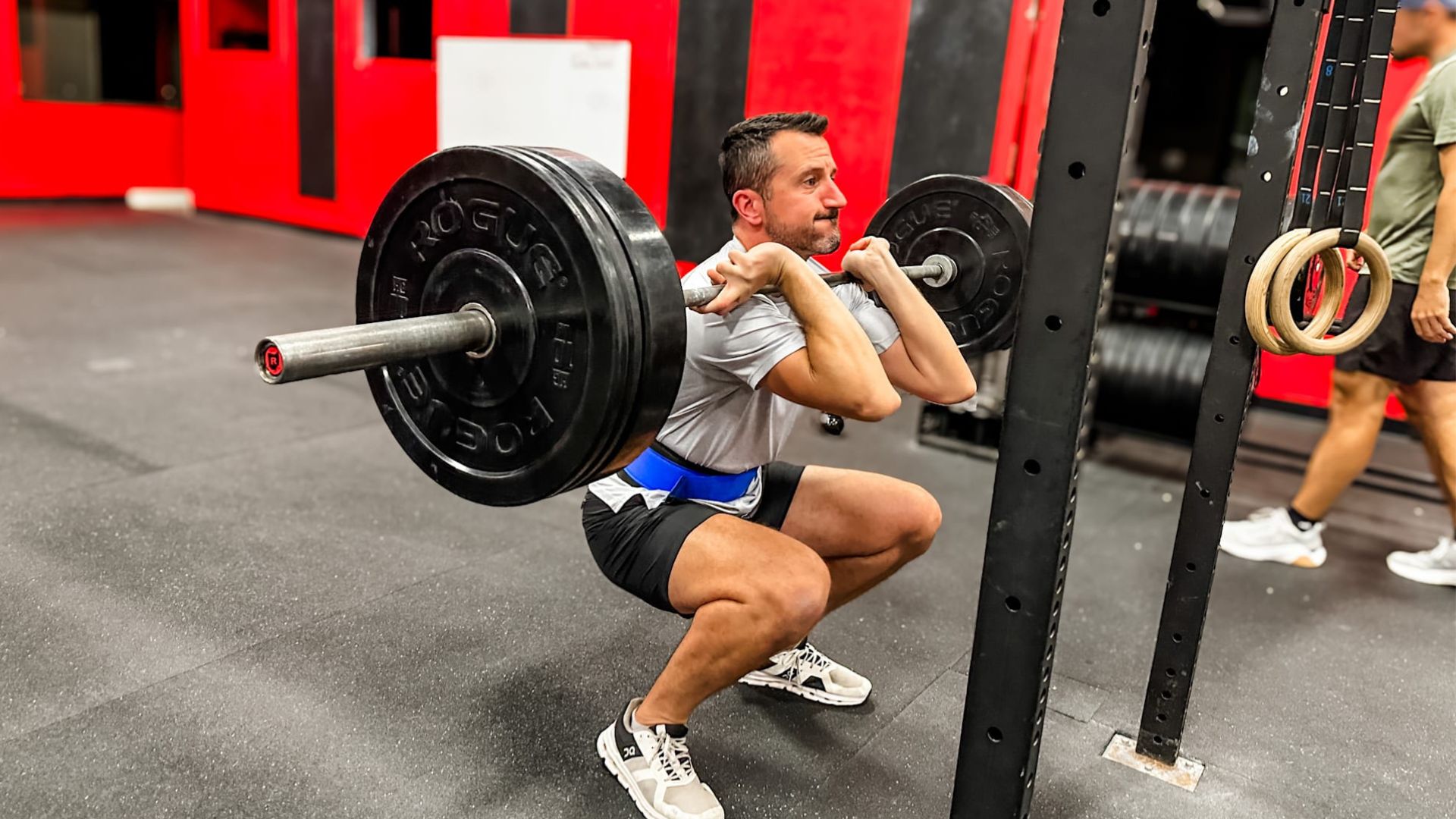
This is also the point where my background matters most. I am a Doctor of Chiropractic, and my rehab background trained me to read movement the way a clinician does: a hip shifting in a squat, a back rounding under load, a shoulder that is not moving the way it should. In a group class, no coach sees literally every rep. What we do is scan the room for the whole hour, watching for the faults that matter most, the ones that put you at risk or quietly hold back your progress. Three months in, we know your movement, and the coaching gets more specific to you.
Month 6: Normal Means Something Different Now
Six months in, normal means something different. You are not the new person anymore. You are the one welcoming the new person, showing them where the equipment lives, telling them the first two weeks are the hardest part.
Fitness is part of your week now, not a project you are working on. You train because it is what you do, the same way you go to work or sit down to dinner. The results are there too: you are stronger, you move better, you have more energy for the rest of your life. But the bigger change is that the gym is yours. You belong here, and you know it.
Your Next Step
So how long until CrossFit feels normal? About three months to feel at home, and about six to feel like it is yours. That is the honest timeline, and it is worth every week of it.
If you want to feel the difference for yourself, the easiest way in is a conversation. Start with a No Sweat Intro: twenty minutes, no workout, just a talk about where you are and what you want. From there, our Foundations on-ramp teaches you the movements one on one, and then you join classes where a coach is watching, teaching, and correcting the whole hour.


