
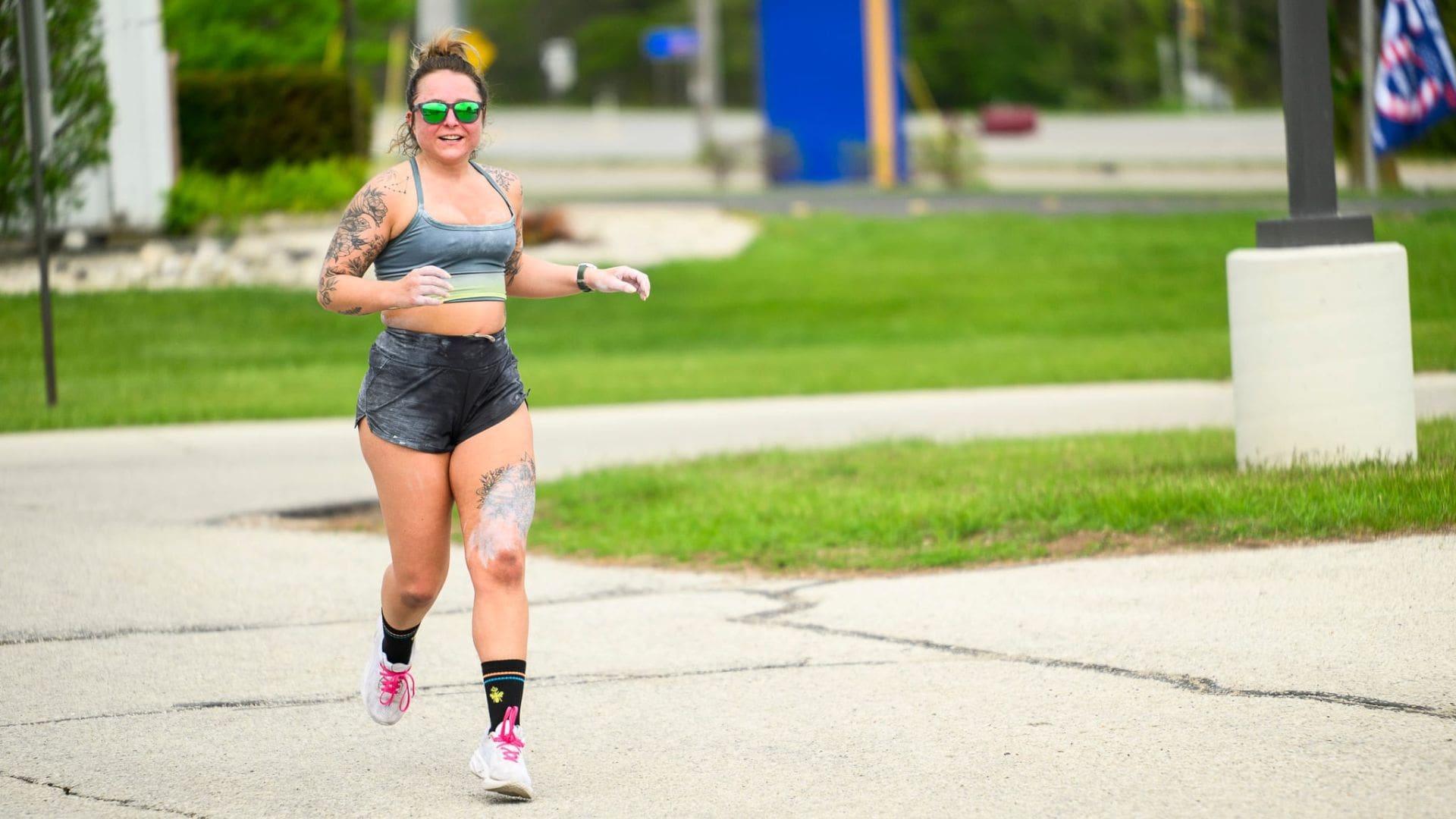
Most people who have lived any kind of active life have dealt with pain or injury at some point. A sore shoulder, a stiff back, a cranky knee. That’s not a sign that something has gone terribly wrong. It’s just part of navigating a body that has been used. The real question isn’t whether you’re going to have an issue. It’s whether you’re in a position to work through it at the right level, rather than shutting yourself down from activity altogether.
A lot of people want to train pain-free, and some gyms that focus on quality coaching will promote pain-free training as the standard. That’s a well-meaning goal, but it’s not always a realistic one. There are better ways to think about this.
One of the biggest reasons CrossFit Armati was built was to serve as an extension of a chiropractic sports rehab practice. The goal from the start was to create a place where people could move from pain and injury into building real fitness. Rehab exercises and performance-based training sit on the same spectrum. The difference is just how much load and demand you’re applying at any given point. A good gym is equipped to meet people wherever they fall on that spectrum.
Why “Pain-Free” Became the Goal (and Why It Can Work Against You)
The desire to train pain-free makes sense. Nobody wants to feel worse after a workout. But when pain-free becomes the only acceptable standard, it can become a reason to avoid training entirely, and that’s where the real problem starts.
If you are trying to live an active life, it’s reasonable to expect some nagging issues along the way. The goal isn’t to eliminate all discomfort. The goal is to understand what that discomfort means, navigate it appropriately, and keep moving at a level that matches your current capacity. Avoiding activity because something feels off often leads to a longer, harder road back.
The Difference Between Discomfort and Damage
Pain and soreness are vague terms, and there’s a broad spectrum of things that fall under those categories. A good coach can distinguish between them, or at the very least point members toward someone who can.
Soreness from training is going to happen, especially for someone who has been relatively sedentary or who is moving into resistance-based or higher-intensity training for the first time. Muscles, tendons, and ligaments adapt to new loads over time, and that process comes with some soreness. That’s normal.
Pain is a different story. Pain is a call for change. The typical pains that come up in a gym setting, a cranky shoulder, a sore knee, a stiff back, usually signal that something is being overloaded. Maybe the movement isn’t being performed well. Maybe the load is more than the person can sustain and move through properly. Maybe recovery is being shortchanged. Stress, poor sleep, and a rough diet all make it harder for tissues to heal and perform. If someone is working long hours, dealing with high stress, not eating well, or not sleeping, their body is going to have a harder time keeping up.
At CrossFit Armati, coaches use a green-yellow-red light system to help members navigate this in real time:
Green: You’re pain-free and have full access to the movement. Keep going.
Yellow: There’s some mild discomfort, but you could stay conversational, and when you stop the activity, the discomfort resolves quickly. Proceed with awareness.
Red: Something is uncomfortable enough that it would stop you mid-sentence, or when you stop the activity, the pain doesn’t go away. That means tissues are being pushed beyond their current capacity. The movement needs to stop, be modified, or be scaled down immediately.
How a History of Neck, Shoulder, or Back Issues Actually Changes Your Training
The goal with any member, regardless of pain or injury history, is to move through the fullest range of motion available in a way that stays relatively pain-free. With someone who has a history of neck, shoulder, or back issues, coaches will move with more caution early on, take more time exposing that person to the full extent of a movement, and be slower to increase load and demand.
If someone is actively dealing with pain or injury, the same process applies. Coaches assess current capacity and scale or modify movements until they find something the person can perform well and keep relatively comfortable.
Common adjustments include swapping out overhead pressing movements or pull-ups for shoulder injuries, and modifying squat and deadlift patterns for low back issues. There is almost always something a member can do on any given day that fits within their current limitations and still constitutes a real workout.
Sometimes those movements look a lot like what you’d see in a physical therapy or chiropractic office. Other times they just look like different gym movements from what the rest of the class is doing. Either way, the work is real and the progress is real.
What a Good Gym Does With That Information
Before anyone trains at CrossFit Armati as a member, they go through what’s called a no-sweat intro. A big part of that conversation is learning the background and history of that person: what they’ve dealt with in the past, what concerns they have about training, and what they’re hoping to get out of it. From there, the staff is made aware of anything relevant before that person ever steps into a class.
Depending on the situation, a new member might start right away in group CrossFit classes, or coaches might recommend some one-on-one work first to slow things down, address any pain or injury concerns, and build confidence before joining a full class setting.
With a sports rehab background built into the facility, CrossFit Armati is also equipped to use movement assessments and screens to check joints and identify potential causes of pain. The goal is not just to avoid the problem but to actively navigate through it.
One of the most rewarding parts of working with injured clients is watching them realize they have the ability to help themselves get better while still training. Not resting and hoping the pain goes away. Actually improving in an injured state.
Beyond the intake process, every single class includes a check-in. After the whiteboard brief and before the warm-up begins, coaches check in with every member. Not just about injuries, but about how they’re doing that day. Are they rested? Have they eaten? Are they stressed? Did they sleep? What’s going on at work or at home? What state are they arriving in, and how does the workout need to be adjusted to meet them there? No one gets lost in the shuffle.
Why Avoiding the Gym Often Makes Old Injuries Harder to Manage
When people are dealing with an achy knee or a bad shoulder, the instinct is to rest. Stop moving, let it heal, and come back when it feels better. That’s a well-intentioned approach, but it rarely works the way people hope.
What tends to happen is that shutting down activity doesn’t resolve the issue. It might feel better for a while, but as soon as activity resumes, the problem comes back. The tissues haven’t been given the right kind of stimulus to actually adapt and recover.
The more effective approach, even if it feels counterintuitive, is to keep moving at an appropriate level. Scale the load, find the right range of motion, and give those tissues the work they need to get stronger. Active participation in recovery produces much better outcomes than waiting it out. This is especially true as people get into their later decades of life. When someone shuts down too many times, they often don’t restart the activities they stopped doing.
What to Expect in Your First Few Weeks at CrossFit Armati
CrossFit Armati works with a lot of people who have neck, shoulder, or back histories, whether they’re dealing with something currently or carrying something from the past. Every one of those people goes through a thorough intake before training begins.
The advice for the first month is simple: be a sponge. Learn the movements. Learn the workout structures. Pay attention to how your body responds to different exercises, positions, and loads. Weight, speed, and finish times are not the focus early on. Moving well is. Load and demand get added over time, as appropriate, not before.
This holds true for every member, but coaches are especially attentive to movement quality in the first one to two months, particularly for anyone navigating sore or injured joints.
Scaling is not failing. Every person’s workout is adjusted up or down to match their current abilities and limitations. That’s not a workaround. It’s how the workout is supposed to work. Coaches will help new members find the right scales and modifications so they can work hard, stay safe, and keep showing up consistently. Consistent training, even at a modified level, produces better results than sporadic full-effort sessions followed by flare-ups and time off.
When Pain Is a Real Signal Worth Stopping For
CrossFit Armati is not a “no pain, no gain” gym. Pain is a call for change, and coaches take that seriously.
If something during training gets your attention in a way that would stop you mid-conversation, or if you stop exercising and the pain doesn’t go away, that’s the moment to communicate with a coach. Not after the workout. Right then.
From there, the coach works through it with you:
- Is the movement being performed correctly?
- Is the load too heavy for what you can sustain right now?
- Does something need to be scaled or modified?
- Or does that exercise need to stop entirely for the day?
The coaches at CrossFit Armati are among the only coaches in the area genuinely equipped to handle those situations in the moment. That’s a direct result of the doctor-led, sports rehab foundation the gym was built on. It’s what makes the facility different from most training environments, and it’s exactly why people with a history of neck, shoulder, or back issues tend to do well here.
If you’ve been holding off on getting into a gym because you’re worried about making things worse, the no-sweat intro is a good place to start. It’s a conversation, not a commitment. Come in, share your history, and find out what training could actually look like for you.


